

 SA
SA
 KW
KW
 IE
IE AU
AU UAE
UAE UK
UK USA
USA
 CA
CA DE
DE
 QA
QA ZA
ZA
 BH
BH NL
NL
 MU
MU FR
FR



















Are you on the verge of launching your app?
An app launch process determines the success of the brand. It is the first step where newly launched businesses get a chance to mark a positive impact.
Therefore, before launching or planning to scale the application, we recommend that you paint a clear picture of your app’s possible growth trajectory.
Why is it important?
Well, for starters, it allows you to develop a precise understanding of all the sustainable growth opportunities and possible complexities. Apart from that, it also ensures that your growth remains on track. And last but not least, it keeps the investors satisfied with a high return on investment.
In spite of all the benefits, the majority of businesses ignore the importance of forecasting the app’s growth trajectory. This carelessness ultimately results in a loss. Make sure you keep a check on it and avoid unnecessary losses by incorporating the steps mentioned below.
Take a look further for a better understanding!
How to Forecast Your App’s Growth Trajectory and Scale in 2026
Step 1. Choose The Most Important Parameter
If you have monetized your business app, then focus on the right parameter in order to determine the success. For example, a subscription app needs to forecast lifetime value, and an application with in-app purchases may focus on the conversion rates.
For context, Day 1 retention across most app categories typically averages around 25–30%, and even top apps hit 40%+ on Day 1, but retention falls to around 5–10% by Day 30 which means that most new users stop using apps within weeks if not engaged properly.
So, in order to forecast your app growth, it is essential that you first define the most critical metrics that you will need to concentrate on.
If you are fostering a community, think about the parameters that outline your target audience. It is the first and the most vital step to predict if you will be able to grow and achieve your goals.
Step 2. Focus On Your Launch
It is important to develop a clear understanding of the launch plan.
For example, if you own a brick-and-mortar business and have created an app for the same, then you might limit your launch to your particular region. While this will help you to target a concentrated population of customers, the technique also holds the capability to trigger additional costs.
But what if the situation is reversed? What if you own an application that you want to launch in multiple areas? It will definitely require you to manage different locations with different cultural complexities.
A solid plan for the mobile app launch is vital to complement your app’s growth. So figure out a streamlined way to increase impact and decrease cost.
Step 3. Find The Gold Standard
The second step is to invest your time into research. Find all your industry averages, and sort them based on fields like market, app category, competitors, and much more.
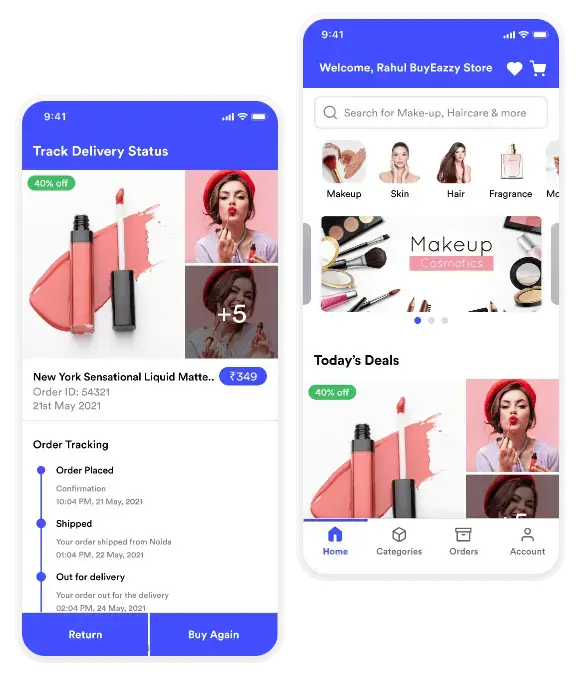
Let us consider an example. If your app category is diverse, like e-commerce, then you need to fetch your averages from a wide-ranging combination of applications from tracking to delivery. With this, you can analyze how your customers might behave to get accustomed to your use case.
Doing this will give you an idea of the expected user behavior.
Having highlighted the importance of identifying the industry’s gold standards, we also understand the involved complexity. The research required is surely very intense.
Therefore, we recommend you reach out to our experts at a leading mobile app development company as we can do it for you.
Step 4. Paid And Organic Installs
For a newly launched application, it is important to gain downloads. And for gaining more downloads, it is mandatory to have a strategy for both paid and organic installs.
Industry analyses show that organically acquired users tend to retain better over time. For example, organic installs have been measured with Day‑30 retention rates nearly 8.3%, compared with about 4.1% for paid sources which underscores the long‑term value of organic growth strategies.
A strategy for organic installs would involve search engine optimization (SEO), app store optimization (ASO), content marketing, social media marketing, and much more. For inorganic or paid installs, strategies like ad campaigns work best.
If your app’s growth is based on inorganic installs, then you need to implement a strategy that reflects the same. Implementation of this technique will definitely boost the need for the required resources.
Step 5. Use The Insights
It’s common for many apps to lose over 70% of new users within three months, and even simple apps often see a steep drop in active users after install which highlights why continuous analysis and iteration is key.
It is beneficial to compare your predicted app’s growth with the collected information. The competition in the Mobile App Industry is cutting edge with complex technicalities. Therefore, it is critical to analyze the data to understand the core metrics.
You can then use those insights to allocate the required resources to remain or get back on track. For early-stage ventures, partnering with a startup app development company can provide the expertise to set realistic growth targets and actionable strategies.
In A Nutshell
Learning more about your existing data is one of the most successful ways to predict an app’s possible growth trajectory. But this is not all. There are a lot of technicalities linked with the process of mobile app development. But painting a clear picture will help you to develop a strong understanding of the desired future.
The competition in this domain is intense. Therefore, forecasting your app’s growth is non-negotiable.
Was this blog helpful? Feel free to contact us and let us know your views.
Want to know more about the metrics you should be tracking to predict your app’s growth? Contact our expert app strategist today.
And, for more tech-infused updates, stay tuned to this space!
Happy reading!
Frequently Asked Questions
1. What is an app growth trajectory and why is it important?
An app growth trajectory is basically the path that your app’s performance was, is, and will be taking, because it reflects how your users, downloads, and revenue evolve over time. It’s important, yes, because without understanding it, you might miss opportunities, or worse, face unexpected losses. And while many businesses ignore it, forecasting this trajectory helps you plan better, allocate resources, and keep investors satisfied.
2. How can I forecast the growth of my mobile app?
You can forecast your app growth by first defining the key metrics, and then analyzing them, because it’s not just about downloads or revenue alone. You need to look at retention rates, lifetime value, conversions, and even compare with industry averages, so that your predictions are realistic. Many experts, and I mean the seasoned strategists, also combine this with predictive modeling and market trends, which helps you see where your app could go.
3. Which metrics should I track to predict app growth?
There are a few metrics that really matter, and you need to track them carefully. Daily Active Users and Monthly Active Users, retention rates, churn, lifetime value, and customer acquisition cost are just some. But it’s not only numbers; it’s also how your users interact, because understanding engagement tells you if your growth is sustainable or just a temporary spike. And by looking at all this together, you get a clearer picture of your trajectory.
4. How do paid and organic installs affect app growth?
Organic installs are great because they show that people are finding your app naturally, and that it has a fit with the market. But paid installs? They are necessary sometimes, because they give you the boost you need in the early phases, and help you hit growth targets faster. You need both, and the balance between them is critical, because one without the other can either overspend or slow down growth.
5. Should startups hire a mobile app development company to plan growth?
Yes, you should, because a professional mobile app development company, or a startup app development company, brings experience that you might not have in-house. They can help define metrics, create launch strategies, and even forecast your growth, so that you avoid pitfalls. And while you might think it’s extra cost, the insights and guidance they provide have been proven to save money, time, and effort in the long run.

Get in touch
We'd love to hear from you.