

 SA
SA
 KW
KW
 IE
IE AU
AU UAE
UAE UK
UK USA
USA
 CA
CA DE
DE
 QA
QA ZA
ZA
 BH
BH NL
NL
 MU
MU FR
FR














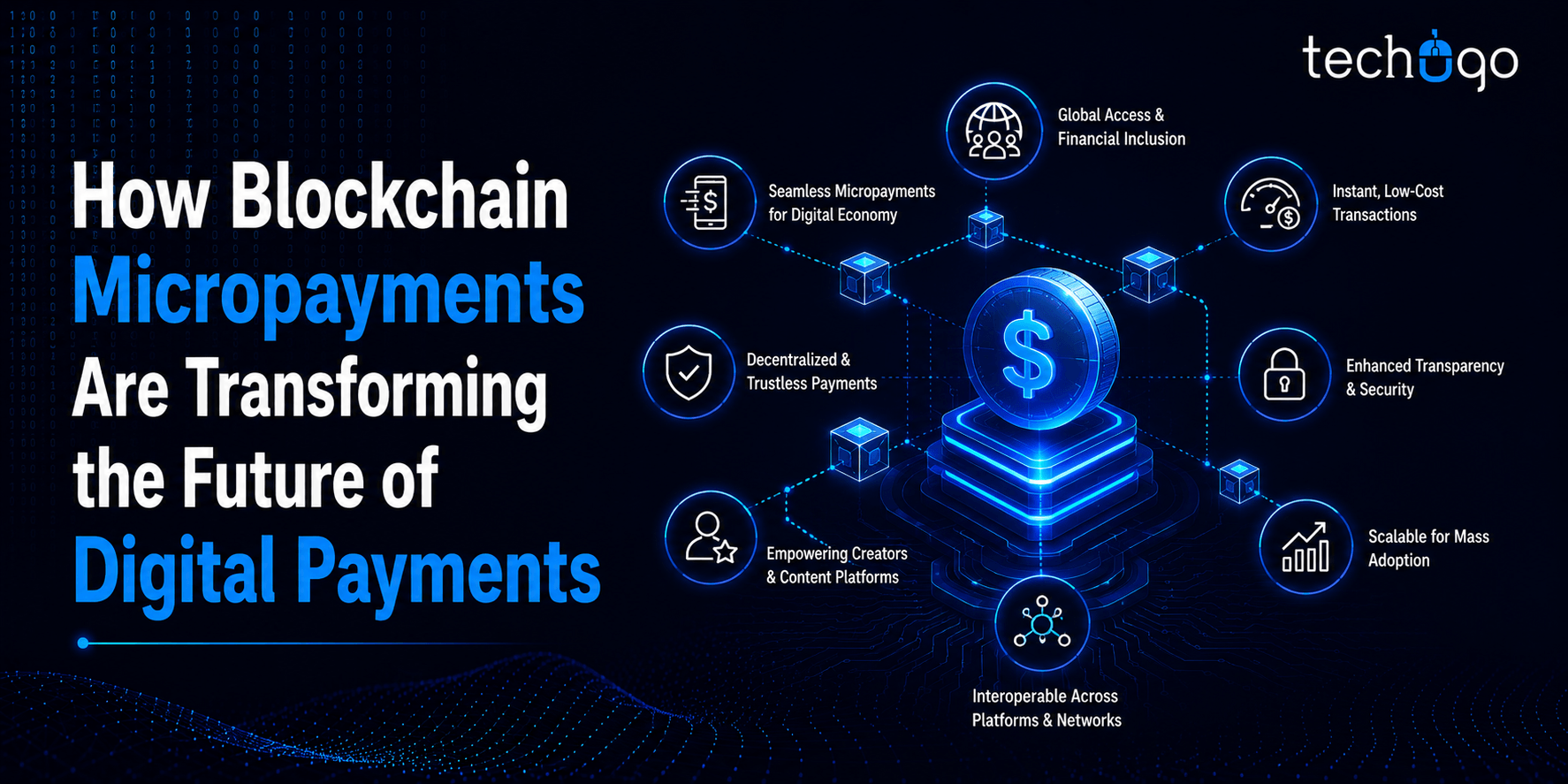


The future of digital payments and blockchain micropayments is here!
How enticing does it sound???
A micropayment is one of the most promising blockchain payment system use cases, that is driving the revenue funnel for many businesses and industries today. With the rise of cryptocurrency micropayments, decentralized payment systems, and low-cost blockchain transactions, this model is rapidly reshaping how value is exchanged online.
To give you a clear understanding of what all gets involved within micropayments using blockchain and how this technology has elevated the future of digital micropayments, let’s read ahead in this blog post…
What are micropayments?
Micropayments are one of the types of transactions, wherein small amounts of money, ranging from less than a cent to around five to 20 US dollars, get processed electronically.
For example, when a user pays a few cents to read a premium article, tips a content creator, or unlocks an in-game feature, these are all digital micropayments. Instead of paying a large subscription fee, users can pay only for what they consume. This makes micropayments using blockchain and other digital systems more flexible and user-friendly.
How have Micropayments evolved over the years?
Yeah, that’s an interesting part to know. The very first-generation micropayments, introduced in the early 1990s, were more an archaic method, as the internet wasn’t matured enough to take the benefits out of micro-transactions. Systems like DigiCash and early digital payment experiments tried to enable small-value transactions, but lacked scalability and adoption.
Then it continued its journey and brought the second generation micropayments during the early 2000s, when the growth of e-commerce and online services started to shape this model further. Here, this transaction method started to gain the attention of the online service providers. This model turned out to be a significant factor in the growth of revenue.
Role of Blockchain in handling micropayments
Have you ever thought that what more you could do with those two to three cents in fiat money?
Ahhh, maybe nothing…!
No, you can do much more beyond your imagination with the future of blockchain-based digital payments, and you can buy a cryptocurrency and use that fraction of crypto to pay for the service through cryptocurrency micropayments systems.
Is it really possible?
Yeah, it is! You would be surprised to know that the smallest denomination of a US dollar is a cent and sums up to $ 0.01, on the other hand, bitcoin – Satoshi, which values 0.00000001 bitcoin. This means with the smallest blockchain micropayments you can easily buy the crypto. However, there is a blockchain transaction fee that must be paid to purchase crypto with fiat money.
For example, platforms like content streaming services or gaming apps can allow users to pay just a few cents (or even less) per article, per second of video, or for unlocking in-app features. This is something that becomes efficient only through micropayments using blockchain.
Further, the integration of blockchain brings the ease of crypto wallets, enabling decentralized payment systems, letting the user pay without setting up accounts on any website.
Also, the Blockchain platform adds value to the digital micropayments ecosystem, wherein users can produce verifiable authentication claims and share only the required information with the vendors. And Blockchain in return gives them an opportunity to monitor the usage of their personal data and control the amount of information they share, which can further be monetized as well.
Benefits of Blockchain Micropayments
The rise of blockchain micropayments is not just a technological shift—it is solving some of the most persistent challenges in traditional payment systems. From cost efficiency to global accessibility, the advantages are hard to ignore.
1. Ultra-low transaction costs
One of the biggest advantages of micropayments using blockchain is the minimal transaction fee. Unlike traditional systems that charge a fixed fee (making small payments impractical), blockchain enables transactions that can cost less than a cent—making low-cost digital payments a reality.
2. Faster transaction speed
With advancements in blockchain payment systems and Layer 2 technologies, transactions can be processed almost instantly. This makes cryptocurrency micropayments ideal for real-time use cases like streaming, gaming, and pay-per-use services.
3. No intermediaries
Blockchain operates on a decentralized model, removing the need for banks or third-party processors. This not only reduces cost but also simplifies the entire digital micropayments ecosystem, making transactions more direct and efficient.
4. Global accessibility
Decentralized payment systems are borderless. Anyone with internet access and a crypto wallet can participate, making blockchain micropayments highly inclusive especially in regions with limited banking infrastructure.
5. Enhanced security and transparency
Every transaction on a blockchain is recorded and verifiable. This ensures a high level of trust, making blockchain in digital payments more secure compared to many traditional alternatives.
6. Better monetization opportunities
Businesses can unlock new revenue models such as pay-per-click, pay-per-view, or pay-per-second services. This is particularly valuable for content creators, gaming platforms, and SaaS products leveraging cryptocurrency micropayments.
7. User data control and privacy
With blockchain, users can control what data they share. This adds a layer of privacy while still enabling secure transactions within the blockchain micropayments ecosystem.
Are there any challenges involved in crypto micropayments?
Well, just like any other technology, there are challenges with the crypto micropayment as well. Let’s get a quick look
Certain blockchain apps take a longer time to make the transaction confirmation, this is a challenge as not every customer has all the time in the world to wait for the transaction to happen.
The volume of micro-transactions is higher than compared to any conventional transaction method, and as of now, blockchain is not fully capable of handling high volumes.
Speed and scalability are still concerns while dealing with the crypto micropayments.
Real-world use cases of Blockchain Micropayments
The true potential of blockchain micropayments becomes clear when you look at how they are being used across industries. These small-value, high-frequency transactions are enabling entirely new business models.
1. Content monetization (pay-per-use models)
Instead of forcing users into subscriptions, platforms can charge a few cents per article, video, or podcast. This makes micropayments using blockchain ideal for publishers, bloggers, and media platforms looking to monetize content without losing users.
2. Gaming and in-app purchases
Gaming platforms are one of the biggest adopters of cryptocurrency micropayments. Players can purchase virtual goods, unlock features, or earn rewards in real-time without worrying about high transaction fees.
3. Streaming and pay-per-second services
With blockchain payment systems, users can pay only for the exact duration they consume like paying per second of video or music streamed. This creates a more flexible and fair pricing model.
4. Tipping and creator economy
Creators on social platforms can receive small tips instantly from their audience. These digital micropayments remove the need for intermediaries and allow creators to earn directly from their followers.
5. Internet of things (IoT) payments
In IoT ecosystems, machines can transact with each other using decentralized payment systems. For example, an electric vehicle could automatically pay a charging station for the exact amount of electricity consumed.
6. API and SaaS usage-based billing
Businesses can charge users based on actual usage like per API call or per feature access. This is where blockchain micropayments solutions help SaaS platforms create flexible and scalable pricing models.
7. Cross-border micro transactions
Traditional systems struggle with small international payments due to high fees. Blockchain in digital payments enables seamless, low-cost cross-border micropayments, making it easier for global users to transact.
What makes these use cases powerful is not just the technology, but the shift in mindset. Businesses are moving from fixed pricing to usage-based, real-time monetization, and blockchain micropayments are at the core of this transformation.
Blockchain Micropayments vs Traditional Payment Systems
When comparing blockchain micropayments with traditional payment systems, the difference becomes quite evident, especially when it comes to cost, speed, and scalability.
Traditional systems were never designed to handle high-volume, low-value transactions, which is where micropayments using blockchain create a significant impact.
| Factor | Blockchain Micropayments | Traditional Payment Systems |
| Transaction Fees | Extremely low (often less than $0.01) | High fees, especially for small transactions |
| Speed | Near-instant (especially with Layer 2 solutions) | Can take minutes to days (depending on method) |
| Scalability | Improving with Layer 2 and off-chain solutions | Limited for micro-transactions |
| Intermediaries | No intermediaries (decentralized payment systems) | Multiple intermediaries involved |
| Accessibility | Global and borderless | Restricted by banks, regions, and policies |
| Minimum Transaction Limit | Supports even fractions of a cent | Not feasible for very small payments |
| Transparency & Security | High (blockchain-based verification) | Moderate, depends on provider |
What this essentially means is that while traditional systems work well for large transactions, they fall short when it comes to digital micropayments and high-frequency transactions.
On the other hand, blockchain payment systems are specifically evolving to handle these limitations. This makes them a preferred choice for modern use cases like content monetization, gaming, and streaming platforms.
Latest market trends & stats in Blockchain Micropayments
The growth of blockchain micropayments and cryptocurrency micropayments systems is no longer theoretical, in fact, it is backed by strong market data and real-world adoption.
- The Bitcoin Lightning Network, a key infrastructure for micropayments using blockchain, processed over $1.1 billion in monthly transactions across 5.2 million payments in 2025. (Source: Fibo Crypto)
- In 2025, the network recorded over 8 million monthly transactions, with transaction volume growing by 266% year-over-year, reflecting the scalability of blockchain payment systems. (Source: CoinLaw)
- Merchant adoption is increasing steadily, with nearly 15–16% of Bitcoin payments routed through Lightning-based channels, compared to under 7% two years ago. (Source: Lightspark)
- The capacity of the Lightning Network crossed 5,600 BTC (approx. $490M+), strengthening the infrastructure for decentralized payment systems and digital micropayments. (Source: Zipmex)
- Transaction efficiency has improved significantly. Blockchain micropayments can now be completed in under a second with fees often below $0.01, making them highly viable for high-frequency transactions. (Source: Zipmex)
- Interestingly, the average transaction size reached $223 in 2025, signaling growing enterprise adoption of blockchain-based payment solutions, beyond just small payments. (Source: Yahoo Finance)
- The ecosystem is also evolving with innovations like stablecoin integration (such as USDT on Lightning), expanding the usability of blockchain in digital payments. (Source: Aurpay)
These trends clearly indicate that blockchain micropayments are no longer experimental. They are becoming a reliable layer for low-cost, fast, and scalable digital payment systems that opens new monetization opportunities for businesses worldwide.
Cost to build a Blockchain Micropayment app
The cost to build a blockchain micropayment app depends on features, scalability, and the type of blockchain payment system used. Since these apps involve smart contracts and decentralized infrastructure, costs are typically higher than standard apps.
| App Type | Estimated Cost | Key Inclusions |
| Basic MVP | $8,000 – $40,000 | Wallet integration, simple micropayments using blockchain |
| Mid-Level App | $40,000 – $100,000 | Custom smart contracts, APIs, improved UX |
| Advanced Platform | $100,000 – $300,000+ | Scalable, secure, enterprise-grade blockchain micropayments solution |
Key Factors That Influence Cost
-
Smart contract complexity
The more complex your transaction logic (like automated payments or subscriptions), the higher the development and audit cost. Smart contract development alone can cost $40,000–$100,000.
-
Platform selection
Choosing between Ethereum, Solana, or private blockchain networks affects both development and transaction costs due to gas fees and scalability differences.
-
Security & compliance
Blockchain apps handling payments require strict security audits, which can add $5,000–$50,000+ to the total cost.
-
Features & integrations
Adding features like crypto wallets, real-time transactions, multi-currency support, and API integrations can significantly increase the cost of your blockchain micropayments solution.
-
Maintenance & scaling
Post-launch maintenance typically costs 15–20% of the initial development cost annually, especially for apps handling high transaction volumes.
What is the future of crypto micropayments?
It wouldn’t be wrong to say that in today’s time, the blockchain laden micropayment concept is widely accepted, and if reports are to be believed then there are more than 15,000 businesses dealing with cryptocurrencies. And a massive number of renowned brands have embraced bitcoins as their preferred payment option.
Surprisingly the notable brands like Twitch, Wikipedia, NBA teams, Dallas Mavericks among many others are gladly relishing the cryptocurrency environment.
On the other hand, global payment companies are very involved in utilizing the cryptocurrency. The most popular names like Mastercard, PayPal, and Visa, are trying their best to venture into the cryptocurrency marketplace to widen their reach and acceptance, especially across growing markets like the USA and UAE.
Just like this, many other transaction methods are occurring and taking benefit from the security and speed of blockchain. In other words, the layer of confidence this technology has brought into practice is nowhere to be seen with any other financial technology, proves the fact that blockchain is leading businesses.
Eventually, many budding startups and enterprises in regions like the USA and UAE are looking for opportunities to break into the crypto-vending market, often partnering with a mobile app development company to build scalable and user-friendly blockchain-powered payment solutions. Sooner, it will be visible to consider using virtual money to make real-life purchases.
Blockchain is here to stay and with time it will evolve, adding the security parameters to boost our collective confidence along the way. Blockchain’s properties; transparency, immutability, and security, make it reliable and trustworthy for areas such as supply chain management, smart contracts, financial reporting, the Internet of Things, the management of private information, and digital payment.
Final thoughts
Indeed, the inception of blockchain has catapulted the development of innovative methods to be utilized in different industries and businesses across the globe. And the envisaged benefits offered by this technology are well embraced, facilitating a faster and secure way to make payments through blockchain micropayments.
Micropayments would trigger a new environment enabling financial issues to be eradicated from the global map. This will not just bring a healthy economic impact, but will also emphasize the benefit on the socioeconomic platform.
At Techugo, as a leading blockchain app development company, we ensure to bring you every information related to digital payment mechanisms and development to help you scale exponentially.
Give us a call today and receive a risk-free quote for your blockchain micropayment app concept.

Get in touch
We'd love to hear from you.