

 SA
SA
 KW
KW
 IE
IE AU
AU UAE
UAE UK
UK USA
USA
 CA
CA DE
DE
 QA
QA ZA
ZA
 BH
BH NL
NL
 MU
MU FR
FR







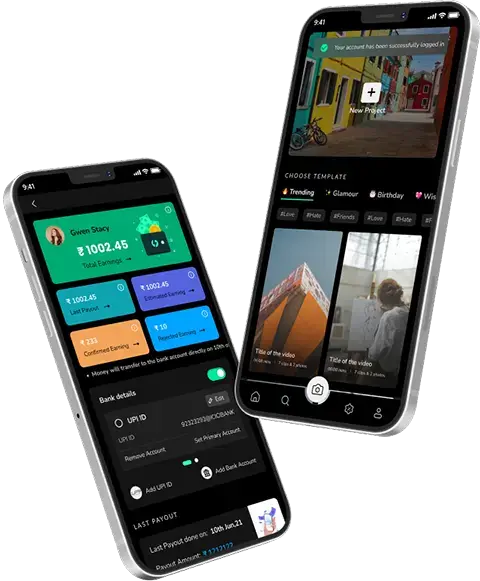



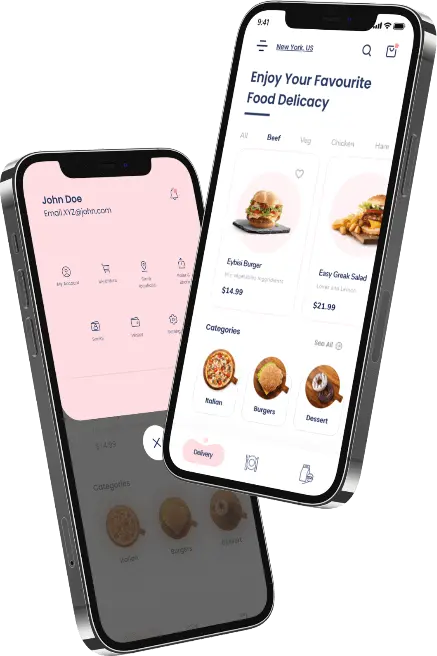





Thinking of starting your own alcohol delivery business, or already running one?
If you still haven’t invested in an on-demand alcohol delivery app development solution, you might be falling behind in a growing market.
Across global markets, regulations are gradually getting updated to support alcohol delivery through digital platforms, which mainly include mobile apps and websites. This change has opened new opportunities for businesses that have licenses so that they can deliver alcohol directly to customers.
Seeing the same, in 2026, the demand for on-demand app development is rising, because customers love convenience and expect instant delivery.
This creates a strong opportunity for entrepreneurs to expand their reach, enhance customer experience, and unlock new revenue streams through digital transformation.
Are you considering entering this space? Or planning to build your own platform?
Today, through this blog, we will walk you through the key factors you need to understand before investing in alcohol delivery app development services. This guide will definitely help you get started the right way if you want to build a successful on-demand alcohol delivery app.
What is an On-Demand Alcohol Delivery App?
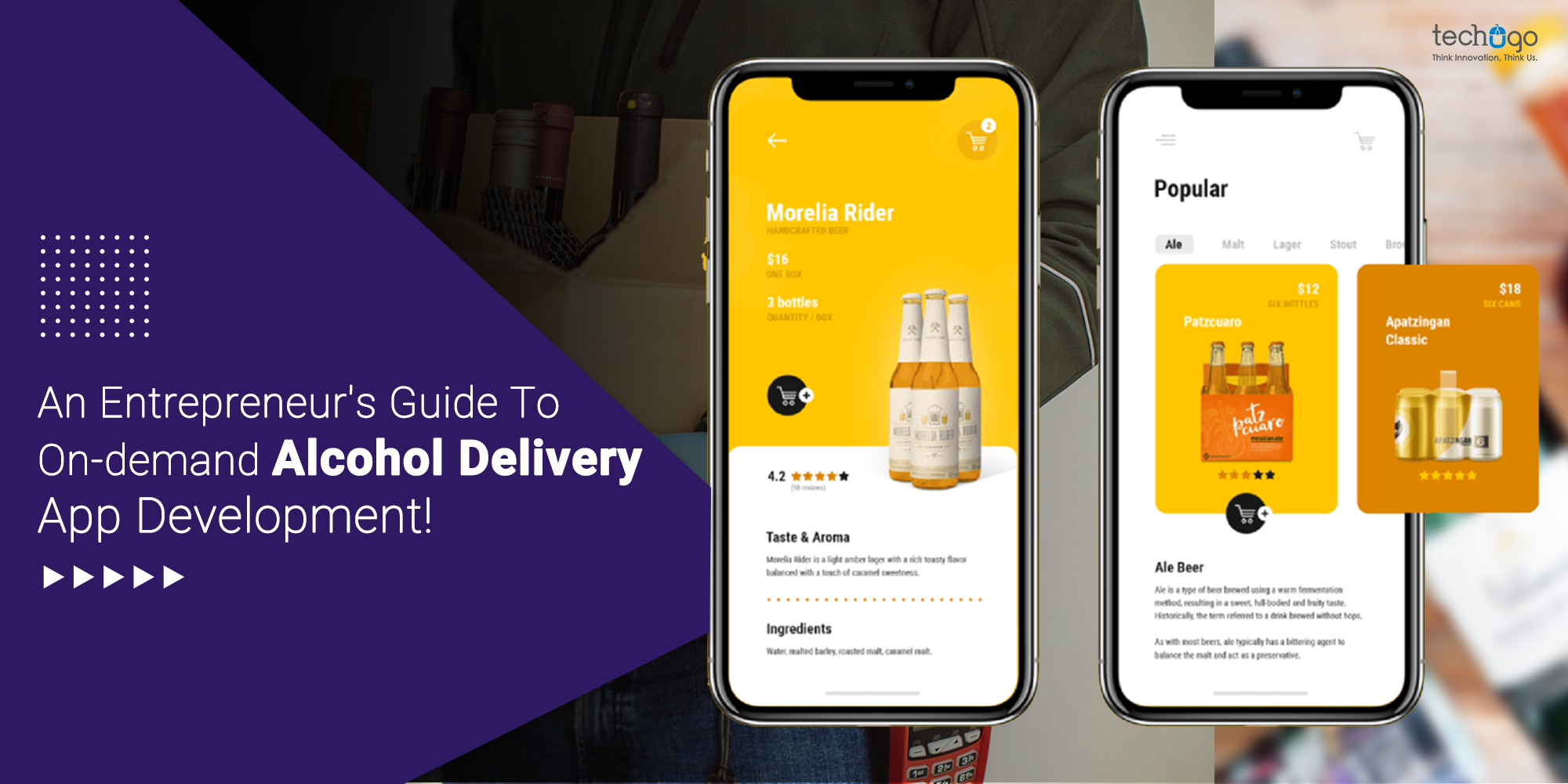
An on-demand alcohol delivery app is a digital platform that allows users to browse, order, and receive alcoholic beverages at their doorstep in real time.
It works as a bridge between customers, licensed liquor stores, and delivery partners. Users can explore different brands, compare prices, place orders, and track deliveries—all within a few taps.
For businesses, this model goes beyond convenience. It creates a scalable system where inventory, orders, payments, and logistics are managed through a single platform.
With the rise of on-demand alcohol delivery app development, these apps are now powered by advanced technologies like real-time tracking, AI-based recommendations, and secure digital payments.
From a business perspective, investing in alcohol delivery app development services helps brands:
- Expand their customer reach
- Offer seamless buying experiences
- Automate operations and delivery management
- Increase customer retention through personalized experiences
In simple terms, an on-demand alcohol delivery app transforms a traditional liquor business into a fast, digital, and customer-centric service powered by modern on-demand delivery app development solutions.
Is 2026 the right time to Invest in On-Demand App Development for Alcohol Delivery?
The short answer is YES, but it’s not just a trend anymore, it’s something that has been building for years and now it is becoming difficult to ignore.
The global alcohol delivery market is growing, and it is not slowing down anytime soon. Reports suggest that the market is expected to grow from $6.59 billion in 2026 to around $14.42 billion by 2035, which clearly shows that the demand is there and it is increasing steadily. Therefore, businesses that enter early, or even now, still have a strong chance to capture market share.
But market size alone is not enough to understand what’s really happening.
The way people buy alcohol has changed, and it has been changing because users now prefer convenience over everything else. They don’t want to step out, they don’t want to wait, and they expect everything to be delivered quickly. Because of this shift, alcohol delivery apps have seen a noticeable rise in usage across global markets.
In fact, a large percentage of urban users, especially those between 25–44, are already using these platforms regularly, and some even rely on them monthly, so, it is no longer an occasional use case, it is slowly becoming a habit.
And then comes the bigger picture, which is the rise of the on-demand economy.
The growth of on-demand app development has changed how services are delivered, and alcohol delivery is just one part of it. Users are now used to ordering everything instantly, and they expect the same experience here as well. Because of that, businesses are moving towards on-demand alcohol delivery app development to stay relevant, and also competitive.
At the same time, technology has also improved, and that is where things get more interesting.
Earlier, managing deliveries, verifying users, and handling payments was complex but now it has become much easier because features like AI-based recommendations, real-time tracking, and automated verification are helping businesses to offer better services, and at the same time manage operations efficiently.
So yes, 2026 is not just the right time, it is actually a very important time.
The demand is already there, the technology is ready, and the users are expecting these services. Therefore, investing in alcohol delivery app development services now can help businesses enter a market that is already growing, rather than trying to catch up later.
And in the end, it really comes down to this, you can either wait and watch how the market evolves, or you can step in while the opportunity is still expanding.
Must-Have Features to Develop An On-demand Alcohol Delivery in 2026
Features and functionalities are the two things that make any application exceptional. So, it becomes important to focus on what truly matters, and remove what does not. Here is the list of all the major features that must be included in an alcohol delivery app.
Here’s a structured breakdown:
Core Features by Panel
| Panel | Features |
| User Panel | Social login & OTP authentication, product browsing & smart search, filters & categories, real-time order tracking, multiple payment options, order history, ratings & reviews, push notifications, offers & discounts, reorder option |
| Admin Panel | Dashboard & analytics, user management, product & inventory management, pricing & discount control, order management, payment tracking, store/vendor management, report generation |
| Store / Vendor Panel | Store registration & profile management, inventory & stock updates, pricing control, order acceptance/rejection, earnings dashboard, product performance insights |
| Delivery Panel | Order assignment, route optimization, real-time navigation (GPS), delivery status updates, customer contact (masked calling/chat), proof of delivery |
Advanced Features (2026-Ready)
| Feature Category | Features |
| Compliance & Security | Age verification (ID scan + AI), KYC verification, license validation, secure payments, fraud detection |
| AI & Personalization | AI-based product recommendations, behavior tracking, smart search, personalized offers |
| Real-Time Capabilities | Live order tracking, delivery ETA prediction, dynamic route optimization |
| User Engagement | Loyalty programs, referral system, in-app chat support, push notifications |
| Business & Marketing | CRM integration, marketing automation tools, promo campaigns, analytics dashboard |
| Scalability & Performance | Cloud integration, multi-store support, multi-location management |
But even then, these are just the core and advanced features that most apps are using right now, and depending on your business model, you can always add more, or sometimes even remove a few, because not every feature fits every product, and that’s where strategy actually starts to matter.
If you have any unique feature in your mind, experts at Techugo are curious to know and discuss.
How to Build an On-Demand Alcohol Delivery App
Building an alcohol delivery app is not just about development, and it is also not something you can rush because there are multiple steps involved and each one connects with the other, so if one part is weak, the whole system gets affected.
So, before you actually start building, you need to understand how things move, and what comes first, and what should not be ignored.
Step 1. Understand the Market and Regulations
The first thing you need to focus on is the market, and also the regulations, because alcohol delivery is not like other apps, and it has rules, strict ones in many regions.
Different countries have different policies, and therefore you need to check what is allowed, what is restricted, and how you can operate within those limits, because if this part is skipped, then the app may get built, but it may not be usable, or worse, it can get blocked.
Step 2. Define Your Business Model
Now this is where your idea starts becoming something real, but at the same time, it can also get confusing.
You need to decide how your app will work, and who will manage what.
Will you connect users with multiple stores, and act like a marketplace
Or will you manage your own inventory, and control everything
Or maybe both, because some businesses prefer hybrid models
And this matters, because your entire on-demand alcohol delivery app development process depends on this, including features, cost, and even timelines.
Step 3. Choose the Right Features and Tech Stack
At this stage, things get a bit more technical, and you need to decide what your app will include, and how it will function.
You will choose features like browsing, payments, tracking, dashboards, and more, but also the technologies behind them, because a poor tech stack can slow everything down later.
A strong foundation helps your on-demand delivery app development stay scalable, and stable, and ready for growth, otherwise fixing issues later becomes expensive, and time-consuming.
Step 4. Design the UI/UX
Now comes the part that users actually see, and experience.
The design should be simple, but also smooth, and it should guide users without making them think too much, because if the app feels confusing, they leave.
Even small things matter here, like how fast the app loads, how easy it is to find products, and how quickly checkout happens, because all of this directly affects conversions, and retention.
Step 5. Develop the App (iOS, Android, or Both)
This is where the actual development begins, and everything starts getting built.
Most businesses today go for iOS and Android app development, because they want to reach more users, and not limit themselves to one platform.
During this phase, the frontend is developed, the backend is connected, APIs are integrated, and features are implemented, step by step, and sometimes things break, and then get fixed again.
Step 6. Integrate Compliance and Security Features
This step is critical, but many tend to underestimate it, which creates issues later.
You need to include things like age verification, secure payments, and data protection, because alcohol apps require compliance, and without it, the app may face legal problems, and users may not trust it.
So yes, this part cannot be skipped, or rushed.
Step 7. Test Everything Before Launch
No matter how well the app is built, testing will always show gaps, and sometimes unexpected ones.
You need to test the performance, the payments, the user flow, and even edge cases, because even a small issue, especially during checkout, can lead to drop-offs, and lost revenue.
And fixing things after launch is always harder.
Step 8. Launch and Scale Gradually
Once testing is done, the app is ready to go live, but that does not mean the work is over.
After launch, you need to observe how users interact, what they like, what they ignore, and where they drop off, because real data tells a different story.
So you improve, update, and scale gradually, not all at once.
Building an alcohol delivery app is not a one-time task, and it has never been, it is a continuous process where things evolve, features improve, and user expectations keep changing.
Therefore, working with the right alcohol delivery app development services provider helps, because you are not just building an app, you are building a system that should grow, adapt, and stay relevant over time.
How Much Does It Cost to Develop an On-Demand Alcohol Delivery App
For any successful business plan, budget plays a huge role. Therefore, knowing the exact cost of on-demand alcohol delivery app development is crucial. But one thing we can assure you is that for any company, it is impossible to quote a fixed figure before thoroughly examining different aspects of development. Because the cost depends on multiple factors, and each app is different, so what works for one may not work for another.
Mobile app creation consists of different milestones. From creativity and design to development and testing, several factors decide the cost of the project. If you want to know a precise figure, we suggest you connect with the technical experts at Techugo. They would study each layer of your personalized app and present you with the total cost.
Still, to give you a rough idea, here’s how the cost breakdowns based on complexity and region:
| App Type | India | UAE | USA |
| MVP (Basic Features) | $8,000 – $15,000 | $15,000 – $30,000 | $25,000 – $50,000 |
| Mid-Level App | $15,000 – $30,000 | $30,000 – $60,000 | $50,000 – $100,000 |
| Advanced App | $30,000 – $60,000+ | $60,000 – $120,000+ | $100,000 – $250,000+ |
These are rough estimates, and they can still vary, sometimes slightly, sometimes a lot, depending on what exactly you are building and how detailed your requirements are.
But what really affects the total app development budget are these factors on which the cost of your projects will depend –
- The technology stack you choose
- The team you hire, and their experience
- Design complexity and user experience
- Features and third-party integrations
- Development timeline and scope
And sometimes, even adding one advanced feature, like AI recommendations or real-time optimization, can increase the cost more than expected, so planning becomes important.
For more clarity, make sure you connect and discuss your idea with the best app developers at Techugo.
How On-Demand Alcohol Delivery Apps Can Make Money
It is best to have a systematic monetization strategy, as it always leads to high revenue generations.
-
Featured Listing
Offering top slots of the online store to brands is another way to monetize the application.
-
eStore Enablement
Monetization sources can be increased by adding an e-commerce feature to the app.
-
Commissions
The app owners can charge a fee for every order placed via their app.
-
Ad Management
On-demand alcohol delivery apps can also make money by advertising relevant products and services.
To sum up, this is the basic information that every entrepreneur needs to know before developing an on-demand alcohol delivery application in 2026.
But knowing these details is not enough. It is also essential to create an app with seamless UI that effortlessly taps into the minds of your user base.
Building an on-demand alcohol delivery app may look simple from the outside, but once you get into it, there are multiple layers, and sometimes things don’t go as planned, because every stage depends on the other.
You will need to assess different trends, statistics, technologies, and much more. If executed with the right approach, your brand would be able to eradicate the cutting-edge competition successfully.
Why Choose Techugo for On-Demand Alcohol Delivery App Development
Choosing the right development partner is not just a simple decision, and it is also not something you should rush, because the success of your app depends on it, and how it performs later.
At Techugo, the approach has always been more than just development because building an app is one thing but making it work in real market conditions is something else and that is where experience starts to matter.
The team has been working as a leading mobile app development company for years and therefore understands how user behavior changes and how businesses need to adapt, so that the app does not just launch but actually sustains.
What makes Techugo different, and also reliable as a top on-demand app development company:
- Experience in on-demand alcohol delivery app development and similar on-demand solutions
- End-to-end development support, from idea to launch, and even after that
- Strong focus on UI/UX, because users stay only when the experience feels right
- Use of modern technologies like AI, analytics, and automation, so that performance improves over time
- Expertise in iOS and Android app development, which helps you reach more users, and scale faster
So yes, it is not just about building features; it is about building something that works and keeps working.
If you want more technical updates, then feel free to connect with the professionals at Techugo.
We would be delighted to answer all your queries. But until then, stay tuned to our blog section for more tech buzz, business ideas, and success plans.

Get in touch
We'd love to hear from you.